
Product design · Coding agents · Software development · 2026 - Current
Designing and building LaunchChair, a planning tool for coding agents
I built LaunchChair to help people research, plan, and build products with coding agents. It keeps research, product decisions, and build requirements together in a specification the agent can use as the project develops.
100+ early users and roughly 10 completed user products.
LaunchChair.io · Founder · Product designer
View the live productRole
Founder · Product designer
Team
Solo founder, working with feedback from founders, engineers, and early users
Scope
Product and feature planning, interface design, application development, agent integrations, marketing, and launch
Duration
2026 - Current
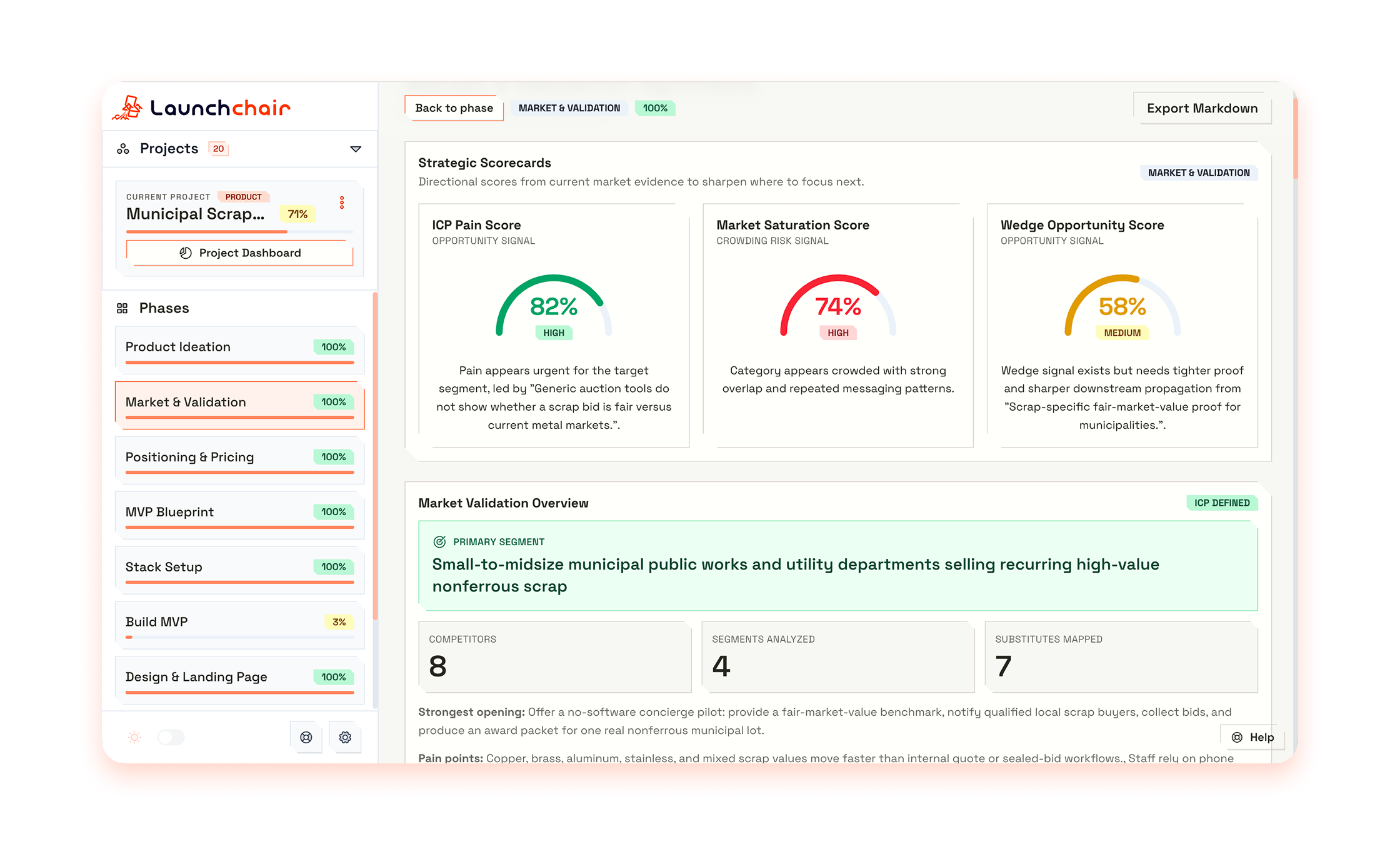
Context
Why I built LaunchChair
I wanted to test whether a structured specification could make it easier to carry research and product decisions into the build. LaunchChair brings that work together: users can research an idea, define the product, and give a coding agent requirements it can work from.
My role
I designed the interface, wrote the application and agent integrations, and handled pricing, onboarding, marketing, and launch. I used feedback from early users to decide what to change and where to expand the product.
Adding a workflow for existing products
The first version focused on new products. Users also wanted help with complex features in products they already owned, so I added a separate workflow for existing codebases. That workflow includes the repository and existing product constraints when defining the work.
Design
Design decisions
01
Making room for research before the build
I put customer and competitor research before feature scope. The workspace brings together the intended audience, the tools they already use, and the reasons they might choose a new product.
Users can use that research to choose a direction, define the first version, and plan how to launch it. This adds work before coding begins, but makes the assumptions behind the product available for review.
02
Keeping decisions available during implementation
Research, scope, and requirements can become difficult to track across a long chat. I organized them in a shared specification, then used build cards to carry the relevant requirements and acceptance criteria into implementation.
Each card includes the information needed to review the work, including its dependencies and testing notes. The specification stays available as the project develops.
03
Working directly with coding agents
Moving between a planning app and a coding agent meant users still had to copy context and write handoff prompts. I built a CLI, MCP bridge, and Agent API so agents could work with LaunchChair directly.
Agents can run research, update the specification, and work through build cards. The build board shows active runs and work that needs human review. I designed and built both the interface and the integrations.
A closer look
Product screens
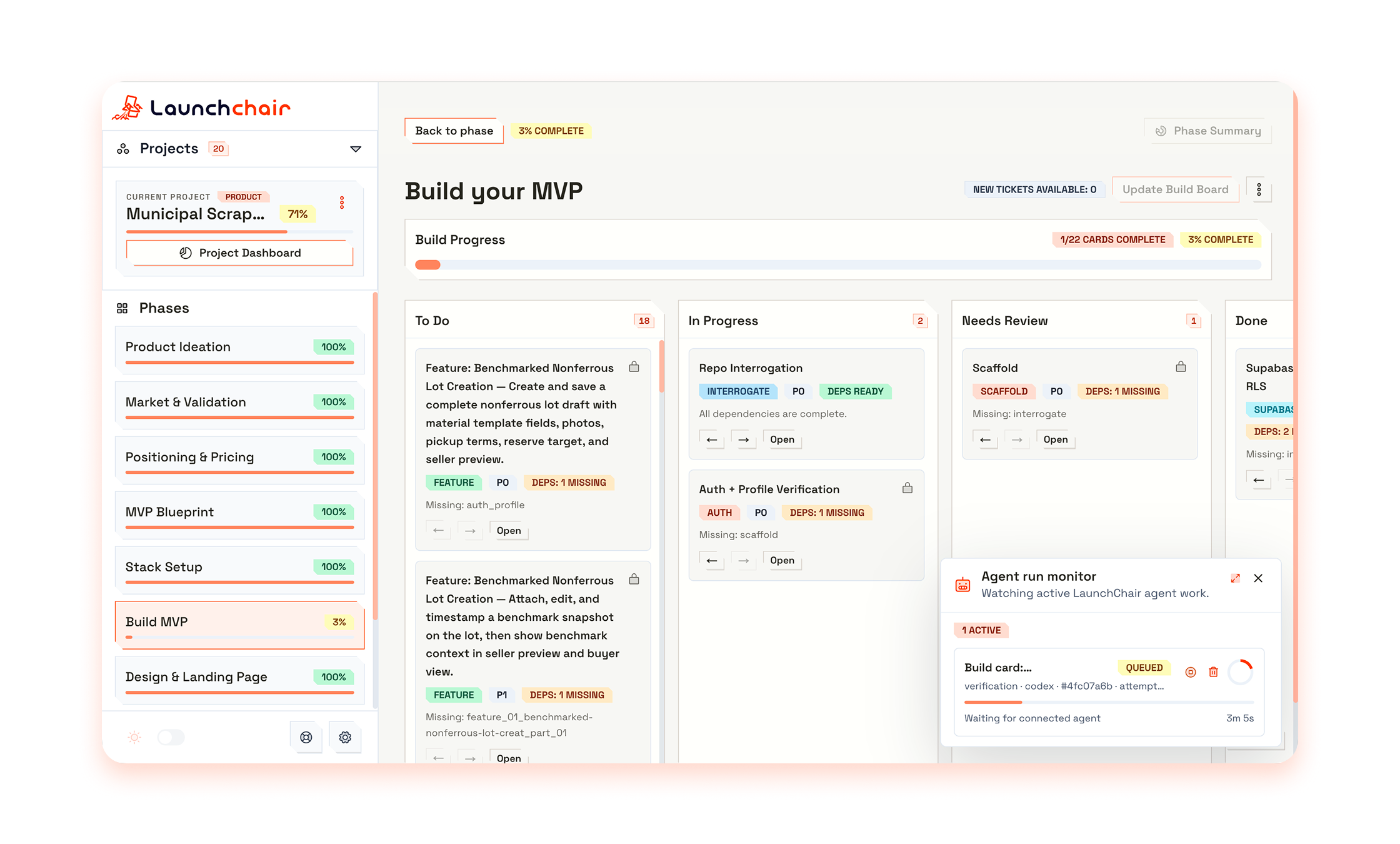
The build board shows each card’s dependencies, status, and active agent run. Work that needs human review stays visible alongside the build.
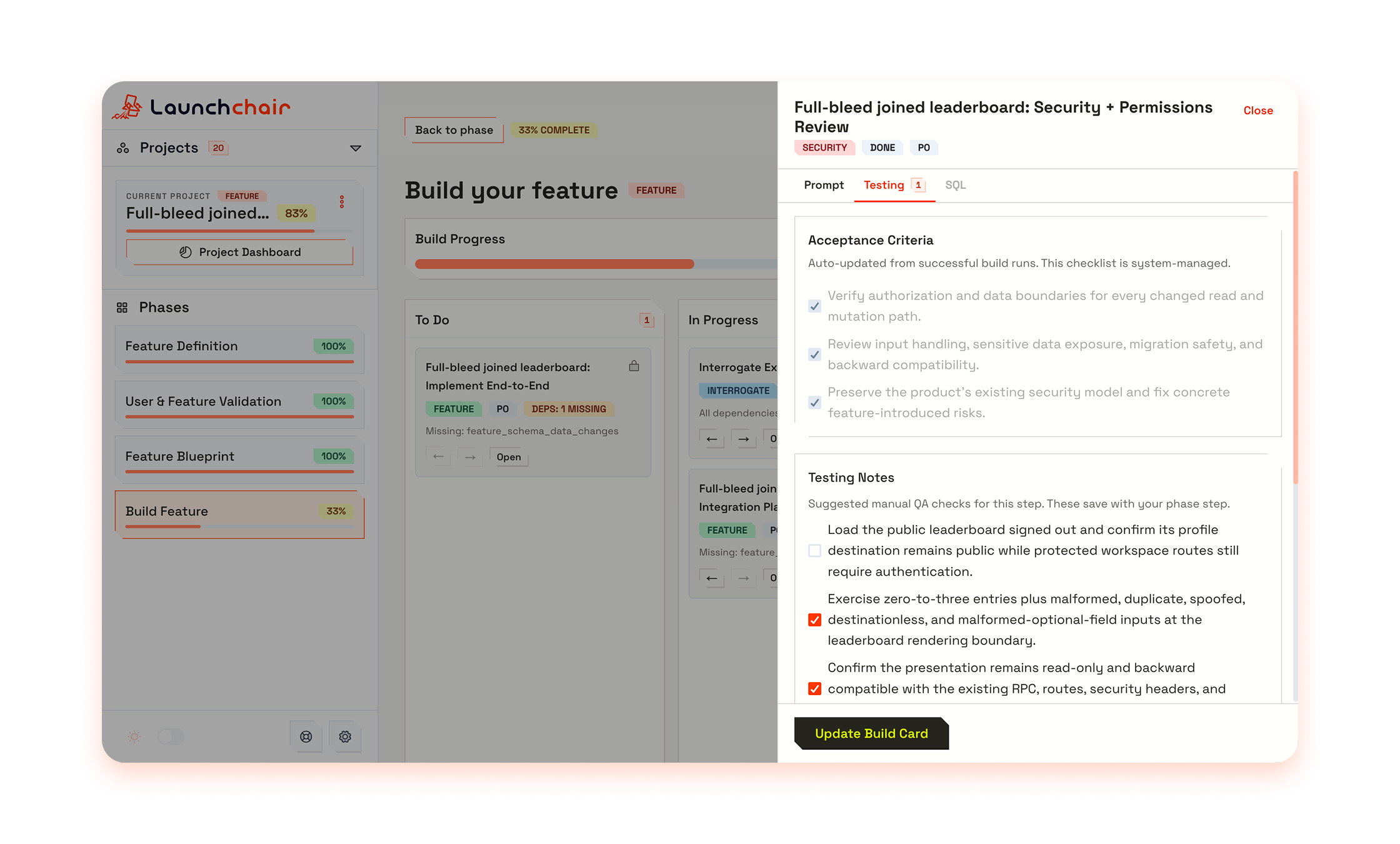
A build card keeps the acceptance criteria and testing notes beside the work they describe.
Product flow
From research to a build an agent can work through
New products and existing features start with different information. Both use a shared specification and build cards, with human review during implementation.
Results
What changed
Early users
LaunchChair reached more than 100 early users in its first five months.
User products completed
Roughly 10 products have been completed through LaunchChair. Several now earn monthly recurring revenue; that revenue belongs to the users’ products.
A feature workflow
I added a separate path for complex features after users wanted to apply LaunchChair to existing products.
About these results
LaunchChair is still early. User and completed-product counts are approximate. The live product is available to explore.